
From Strategy to Scale: How Healthcare Leaders Drive Real AI Adoption from the Top Down
VIVE 2026 Recap – In Case You Missed It
The Optura team recently attended ViVE 2026 in LA. If you haven’t been, ViVE is where the people actually making decisions about healthcare’s digital future show up – executives, operators, builders. AI owned the conversation this year, but not in the way vendors wanted. Leaders weren’t asking “what can AI do?” They were asking “why isn’t it working yet?” That’s a better question.
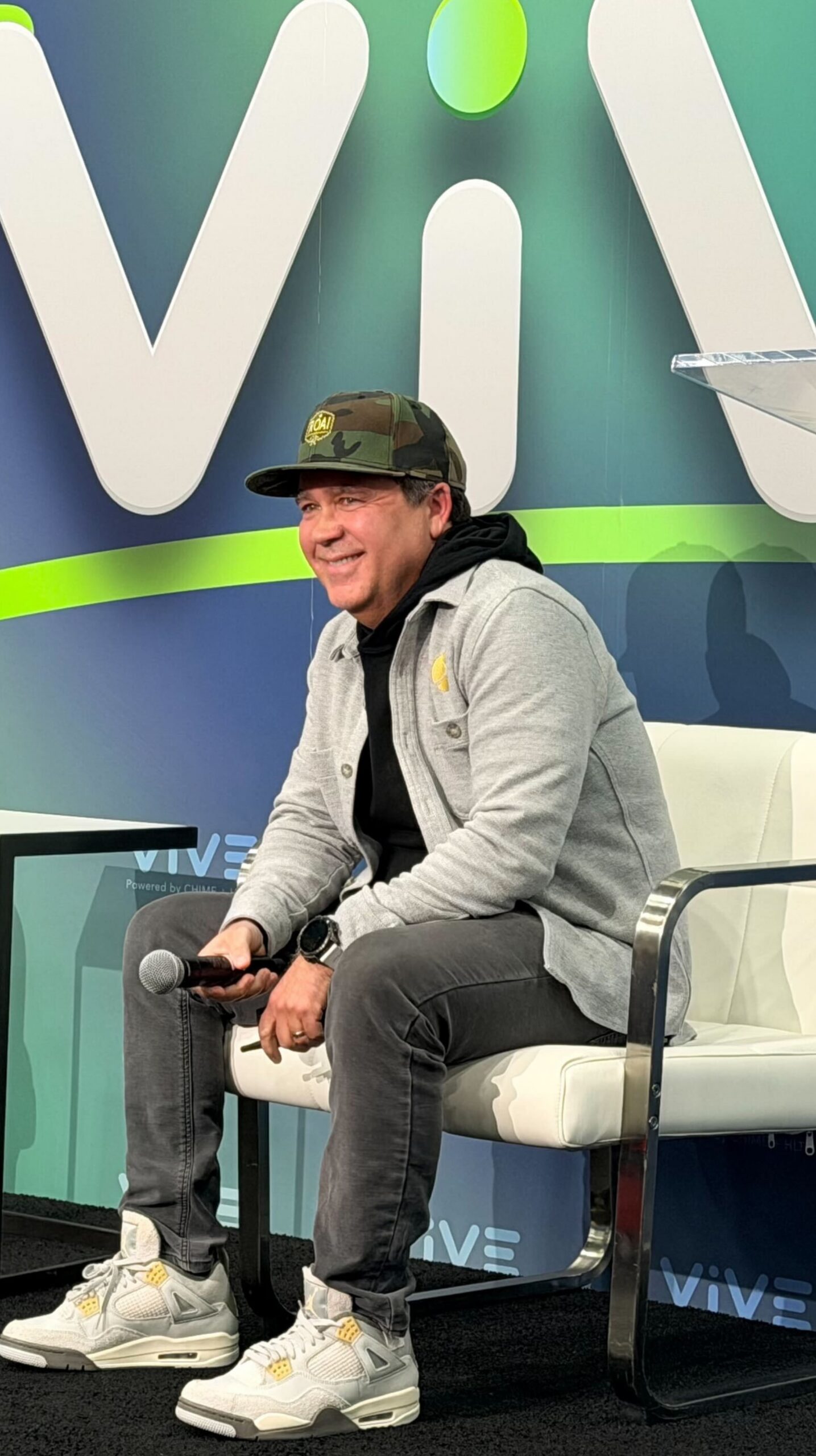
While there, Optura Co-Founder & President Mike Hollis took the stage with Anika Gardenhire, Former Chief Digital & Transformation Officer at Ardent Health, for a session called From Strategy to Scale: How Healthcare Leaders Drive Real AI Adoption from the Top Down. Here’s what they said and what we think you should be sitting with right now.
The Pressure to “Do AI” Without Structure
Mike opened with the thing nobody wants to say out loud: most healthcare organizations are deploying AI with no clear strategy for how it scales, who owns it, or how to know if it’s actually working.
The pressure makes sense. Boards want movement, vendors are pitching hard, and the fear of falling behind is louder than the case for doing it right. But speed without structure isn’t progress. It’s pilot proliferation, and that’s where trust breaks down before it ever gets built.
What It Actually Feels Like When AI Stalls
Anika brought the view from inside the health system. She’s led digital transformation at Ardent Health and has seen firsthand what happens when AI initiatives lose momentum, not because the tech failed, but because the organization wasn’t ready for it.
The pattern she described will sound familiar: a pilot launches with executive enthusiasm, shows promise in a controlled setting, and then hits a wall when it meets the people who actually have to use it every day. C-suite, ops teams, frontline staff – they’ve all watched enough “transformation” efforts come and go. If they don’t trust the intent behind the initiative, they won’t engage with it. And honestly, they shouldn’t.
Internal trust, Anika emphasized, isn’t a soft metric. It’s the precondition for anything happening at all. Leadership has to own the AI strategy visibly – not hand it off and check in once a quarter. That means being in the room, hearing concerns directly, and making decisions that prove those concerns were heard. It’s TRUST.
Making Value Visible – Not Just Measurable
One of the sharpest points in their conversation came when they addressed the gap between where organizations measure AI success and where it actually needs to be felt.
Here’s the gap: healthcare organizations aren’t tracking AI value in a way that reaches the people doing the daily work. Clinicians, operators, frontline teams – they often have no clear line of sight to what’s changed or why it matters. When the people closest to the work can see and articulate the value, trust compounds. When they can’t, it erodes. Quietly, and then all at once.
This is also where governance earns its keep – not as a compliance exercise, but as a trust-building mechanism. Anika talked about giving frontline teams a voice in how AI gets deployed, what guardrails exist, and how decisions are made. That kind of transparency turns skeptics into advocates faster than any dashboard.
The ROAI™ Loop
This is where Optura’s ROAI™ framework enters the picture – the model for measuring Return on AI Investment that goes beyond pure efficiency metrics.
The loop works like this:
Internal trust → enables action → demonstrated value → builds ROAI™ → earns deeper trust → drives outcomes.
Most organizations measure AI in time saved, cost reduced, throughput increased. Those metrics matter, but they’re incomplete. ROAI™ accounts for the full picture: adoption rates, user confidence, workflow integration, and the compounding effect of trust over time.
Mike and Anika walked through the common pitfalls that break the loop: chasing pilots without a scale path, skipping trust-building because “the tech is proven,” and measuring only efficiency while missing adoption rates and user confidence. Each one is a way of optimizing a tool that your best people are quietly working around.
What Has to Be True at the Executive Level
The final segment was direct: this isn’t a middle-management problem.
For AI to scale in a healthcare organization, the executive team has to own it in a way that’s visible, consistent, and connected to how the organization actually makes decisions. That means real ownership, not just sponsorship. It means aligning AI strategy with operational priorities so every pilot has a clear path to scale, or a clear reason to stop. It means treating adoption metrics with the same seriousness as financial metrics, because one feeds the other.
And it means being honest about where you are. If you’re sitting on a dozen disconnected pilots with no governance framework and no frontline buy-in, the answer isn’t pilot number thirteen. The answer is to step back and build the trust infrastructure that makes scaling possible.
What Has to Be True at the Executive Level
Mike closed the session with a single message: trust isn’t what slows AI adoption down. It’s what makes it work.
Build the internal trust first. Make value visible to the people who matter most, the ones doing the work. Measure ROAI™ in a way that captures adoption and confidence alongside efficiency. And lead from the top, visibly and consistently.
The organizations that get this right won’t just have successful AI programs. They’ll have organizations that know how to change, and that’s more valuable than any single tool.
Want to see the full conversation? The session recording will be available soon. Sign up to get notified when it’s live.
Optura helps healthcare leaders build the trust infrastructure for AI at scale. Our platform delivers ROAI™ by connecting strategy to execution, so the value isn’t just measured, it’s felt.
Want to see how that comes to life? Request a demo and let’s explore what we can build together.


Stay up to date with thoughtful takes, real outcomes, and the moves leaders are making.
Subscribe Subscribe