
The Buck still Stops With the Leader
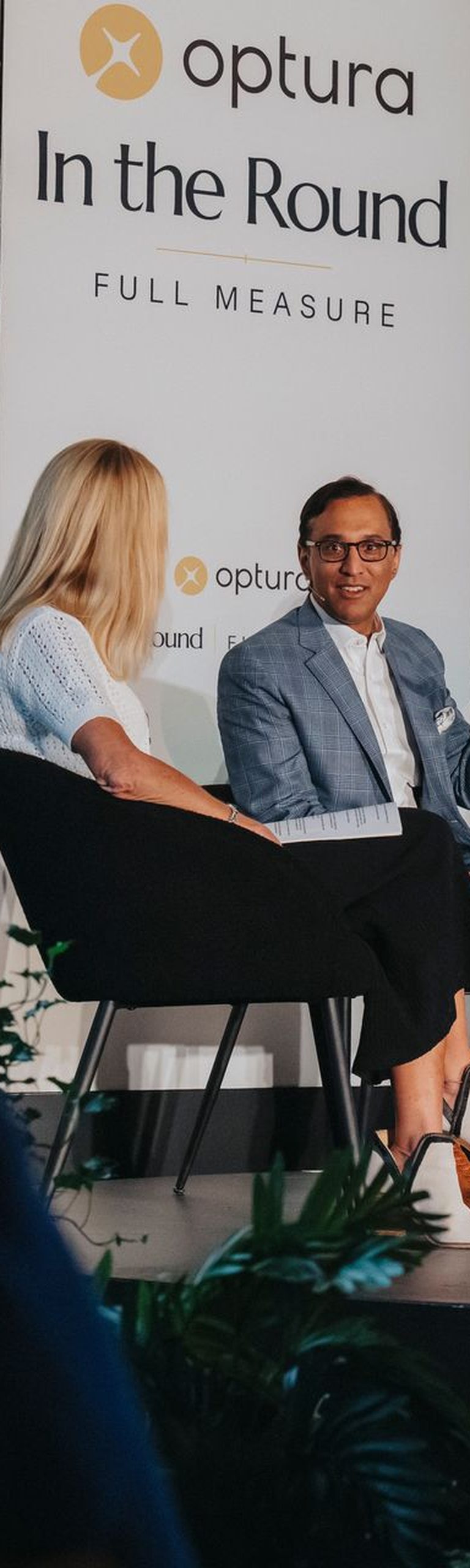
“Three years feels like a decade.” That’s how one executive described the pace of change on the Leadership’s New Playbook panel at In the Round 2026.
Optura closed the event with this panel because every other conversation, about boards, budgets, ownership, and trust, eventually comes back to how leaders lead. It opened with the question behind every session, how to lead through this much change. Most of the answers were about what’s different now. A few were about what isn’t.
What changed
Leaders don’t need to have the answer. A physician on the panel said the hardest habit to break is needing to be certain, because medical training treats anything less as failure. Their job now is to set up the conditions for other people to find the answer. They admitted they haven’t fully let go.
Leaders set the outcome and let teams find the path. With facts and answers a prompt away, leaders can let go of being the subject-matter expert. The work is the “why” and the “who,” and it happens through questions more than directives. When one panelist handed a team the outcome instead of the plan, the team’s answer beat anything they would have come up with. The struggle is the urge to tell teams how anyway.
Leaders have to look past the next win. One executive has a saying their team always points to. “Winning is a great deodorant.” The numbers matter, but the lesson was to step back and “impose an altitude change” so the leadership team keeps an eye on the bigger shifts in the market.
Decisions come without full clarity. Leaders who aren’t comfortable with ambiguity will get left behind. Someone still has to name what isn’t working and make the hard call, because clarity probably isn’t coming.
Intuition is knowing where to go deep. The best people in an organization, flooded with data, can tell when the three facts on a slide don’t explain the problem, or when a waterfall chart looks a little too clean. The worry is that younger leaders won’t get the reps to build that instinct if AI always hands them the answer. One remedy is to schedule time to go deep, the way schools set aside time to drop everything and read.
Focus takes work. Leaders are on around the clock, even with tools that were supposed to save them time. The advice was to spend time on what only you can do. One panelist used to tell leaders to spend one day a month somewhere quiet, neither home nor the office, just to think. Another looked at their team’s goals and found more of them rewarded activity than outcomes.
Saying no takes a system. Teams come up with good ideas constantly, and most of them aren’t on the priority list. The discipline is a stack rank tied to outcomes, including the conversation with a team about why its favorite project fell off.
What didn’t change
The leader owns the outcome. AI doesn’t have a job description, doesn’t sit on the board, and won’t be held accountable for results, clinical or financial. The buck stops with the leader, whether a decision came from AI, a direct report, or someone three levels down. There’s no culture of accountability if leaders don’t demonstrate that every day.
The customer comes first. Accountability starts with the patient or member. That means building in protections from the start and keeping watch after launch. One leader recommended Dan Heath’s book Reset, which defines waste as anything that doesn’t affect the customer’s needs.
People still do the work. Safe access to AI tools gets people comfortable with them, and frontline staff in the design room build solutions that stick. Some of the pharmacy call center staff who helped design one platform became its advocates. Leaders also have to think about the early-career pipeline, since new hires are increasingly fluent in AI.
The board’s job is the same. The board picks the CEO, shapes the strategy, and owns compliance and cyber risk. Cyber risk matters more now that attackers use AI too, and healthcare is a primary target. Keep the board informed early, but don’t let it pick AI projects.
Nobody can see the future. Leaders learned during COVID to lead through knowns, unknowns, and unknowables, and that experience applies now. It was never the leader’s job to predict the future, only to see the range of possibilities and help the team handle the uncertainty. Be honest about what you don’t know, build an organization resilient enough to absorb the bumps, and remember that leaders don’t do this alone. If you feel good about fighting fires, you’re at the wrong level of your organization.
Advice from the stage
The parting advice was short. Be adaptable, because your way may not be the best way. Focus on developing and inspiring people. Get comfortable with ambiguity, and be open about not having the answer. And surround yourself with curious people. One panelist pointed out that five of their seven direct reports had been with the organization for just over a year, which made the transformation something they were building together.
AI may change the tools of leadership, but not the responsibility, and judgment and accountability matter more than ever. Optura works with the leaders carrying that accountability, giving them a clear view of what their AI is delivering so their judgment calls rest on evidence.
For the themes that ran across every panel and roundtable, read Full Measure: The Set List, Optura’s insights report from In the Round 2026.
Stay up to date with thoughtful takes, real outcomes, and the moves leaders are making.
Subscribe Subscribe